Who's Home

Owl House for Eastern Screech Owl

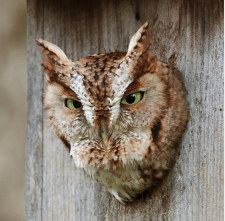
Eastern Screech Owls are small gray or reddish owls who inhabit mostly hardwood forests. They are about 8 inches (21 cm) tall. They mostly range east of the Mississippi and benefit from nestboxes, particularly in the Northeast. Learn more...

Fly Away Home
Birdhouses

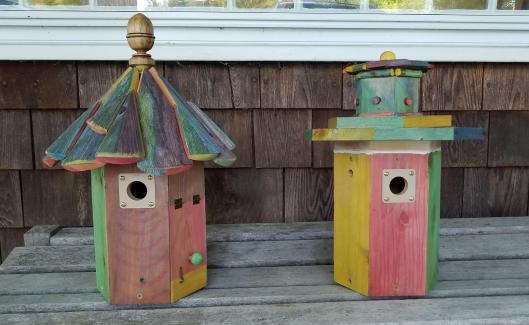
Our Fly-Away-Home Bird Houses are available for wrens, chickadees, nuthatches and titmice. Each is a handmade original that provides bird-savvy features.

Fly Away Home Birdhouses

Colorful Fooby Wooby birdhouses - science + imagination

Eastern Screech Owl

Eastern Screech Owls are small gray or reddish owls with ear tufts who inhabit mostly hardwood forests. They are about 8 inches (21 cm) tall. 

According to Cornell University's  Nest Watch site, screech owls have a broad range, mostly east of the Mississippi and do not migrate. They benefit from nestboxes particularly in the Northeast. 

These owls eat night-flying insects and small mammals, such as voles and deer mice. 

Fun OWL Facts
  • They eat their prey whole!
  • They mate for life!
  • Males are smaller than females
  • The oldest recorded wild Eastern Screech-Owl was over 14 years

More scientific information

Design & Construction

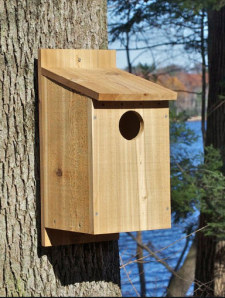
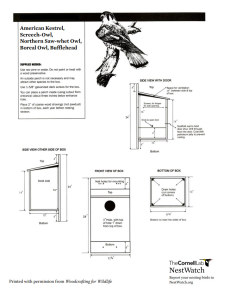
"Whos Home" Owl House follows nestbox dimensions from  nestwatch.org, which provides a home suitable for Eastern Screech Owls, as well as Saw-Whet Owls and American Kestrels.

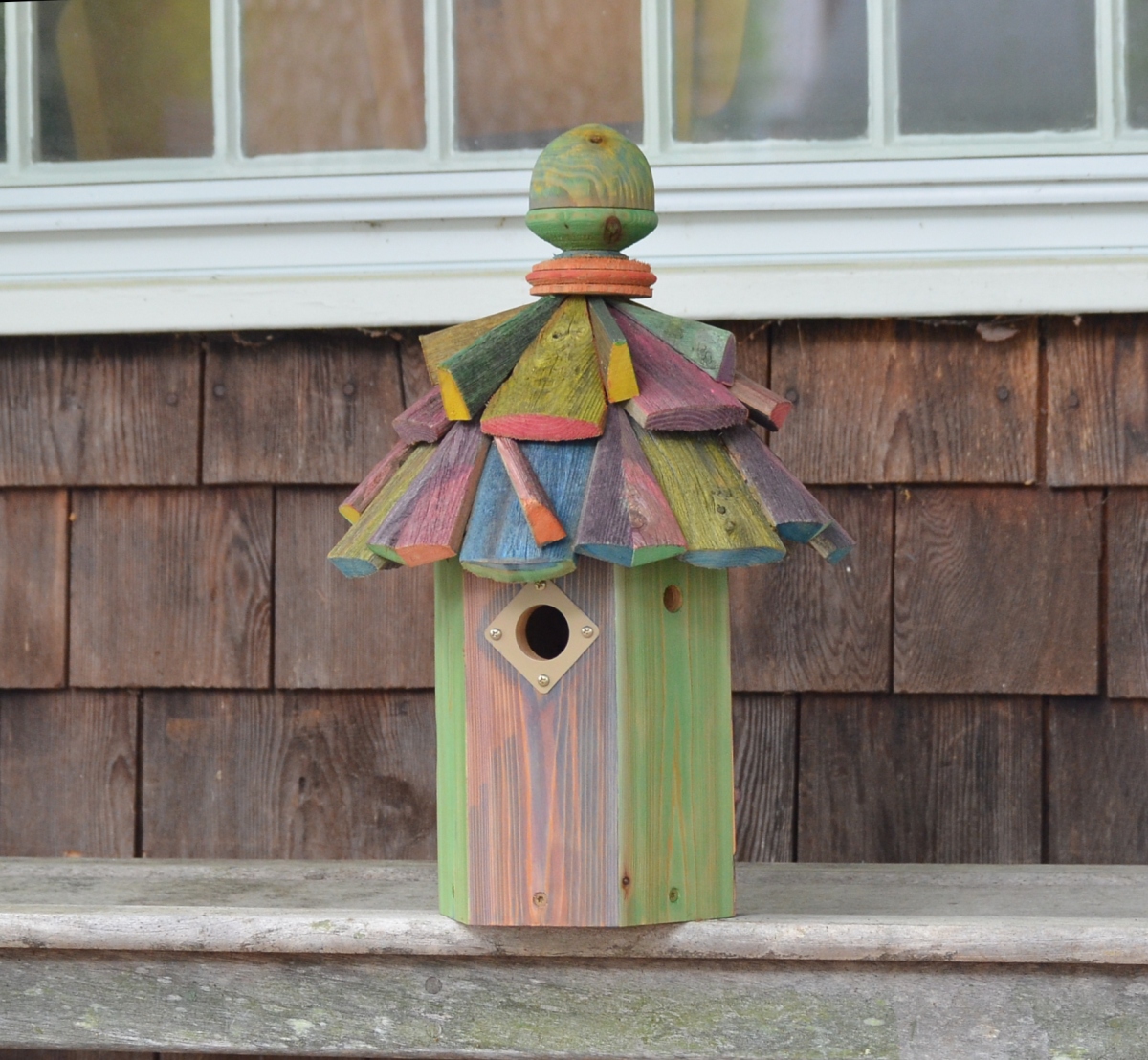
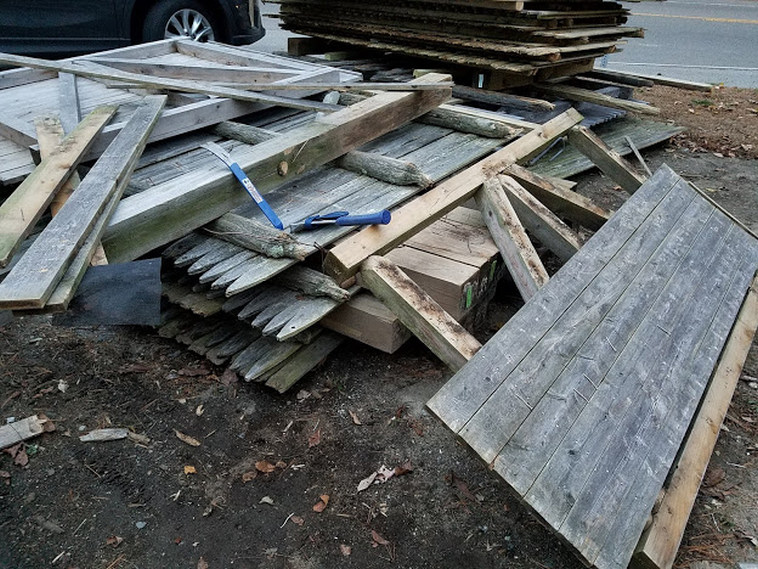
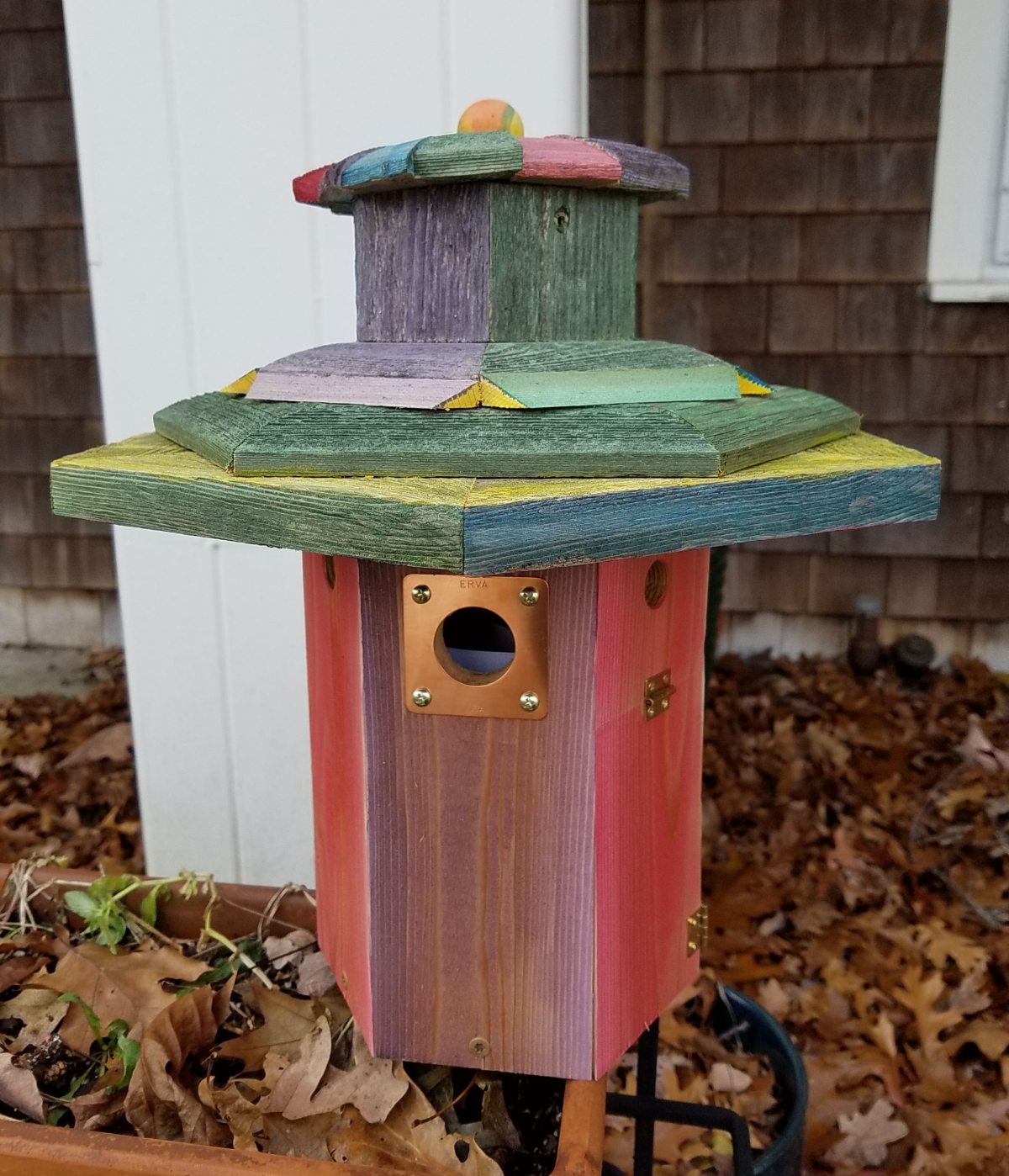
We begin with a hardwood frame, to which we attach panels made from laminated recycled cedar fence. 

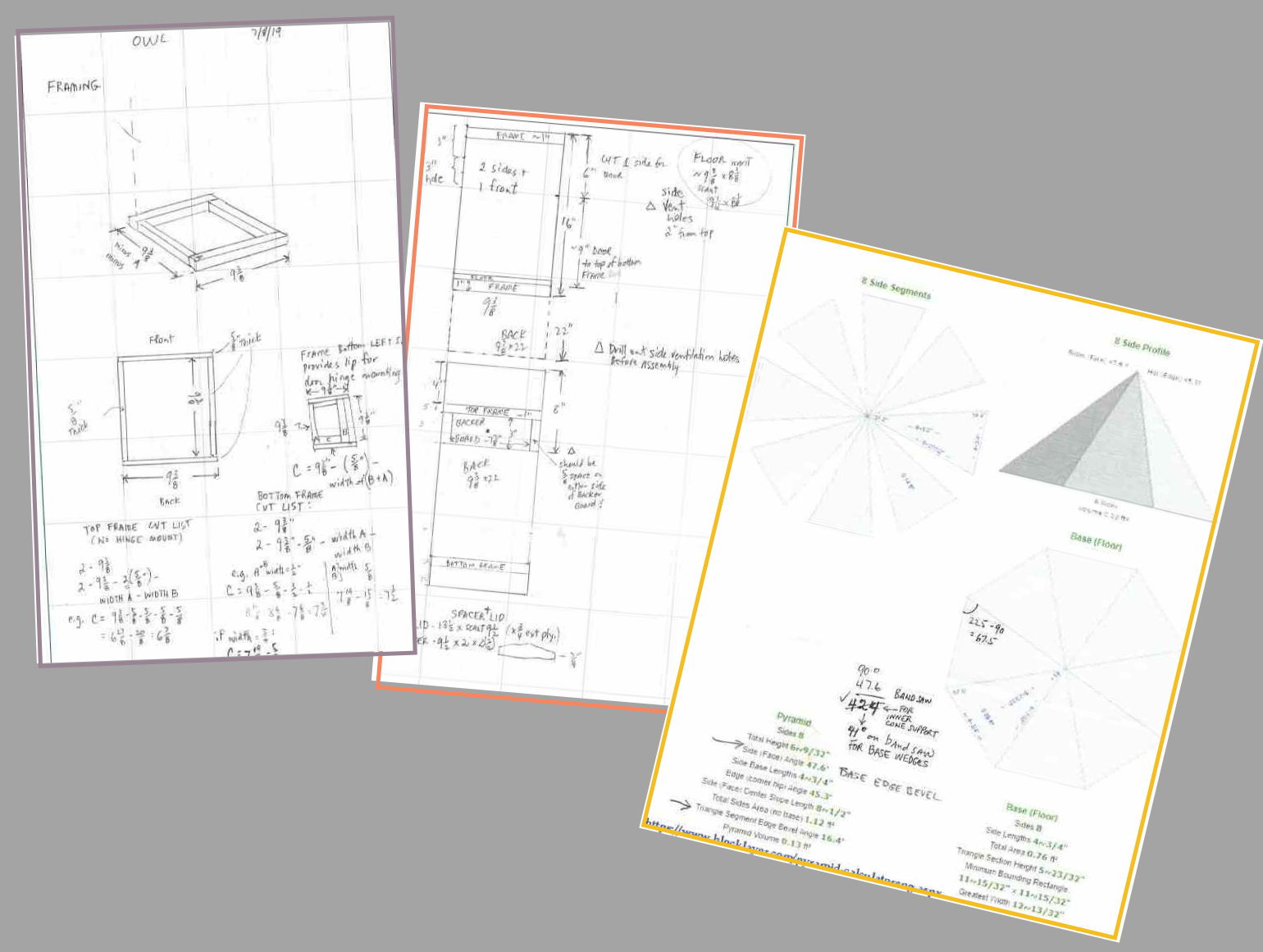
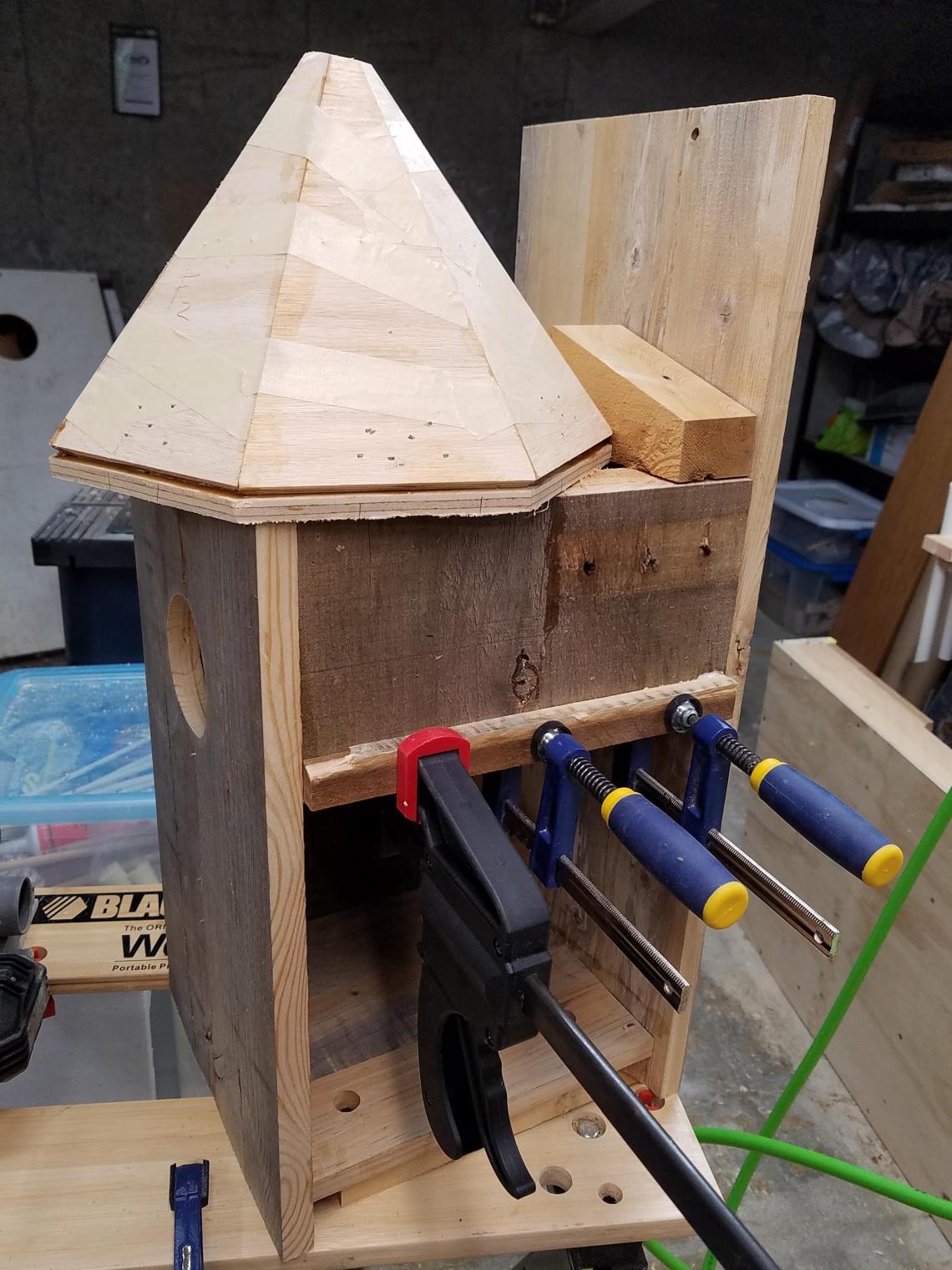
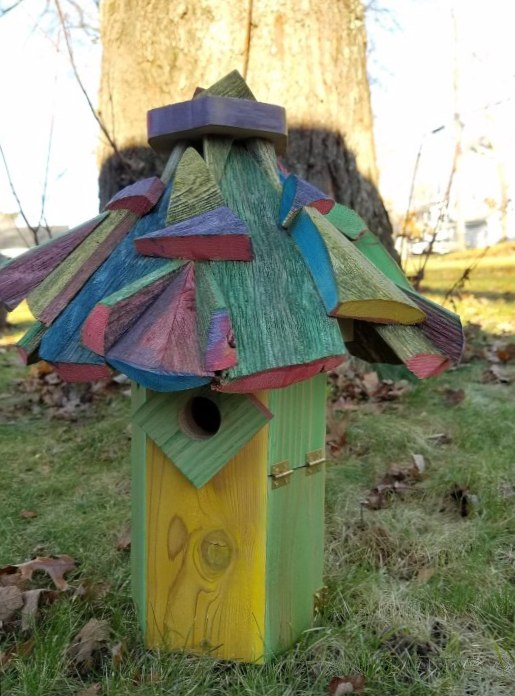
We construct the conical roof over a 8-sided pyramid subroof, made from exterior grade plywood. To that, we glue and nail recycled cedar stockade fence pieces cut and fitted to develop the unique "tiki" style exterior roof. 

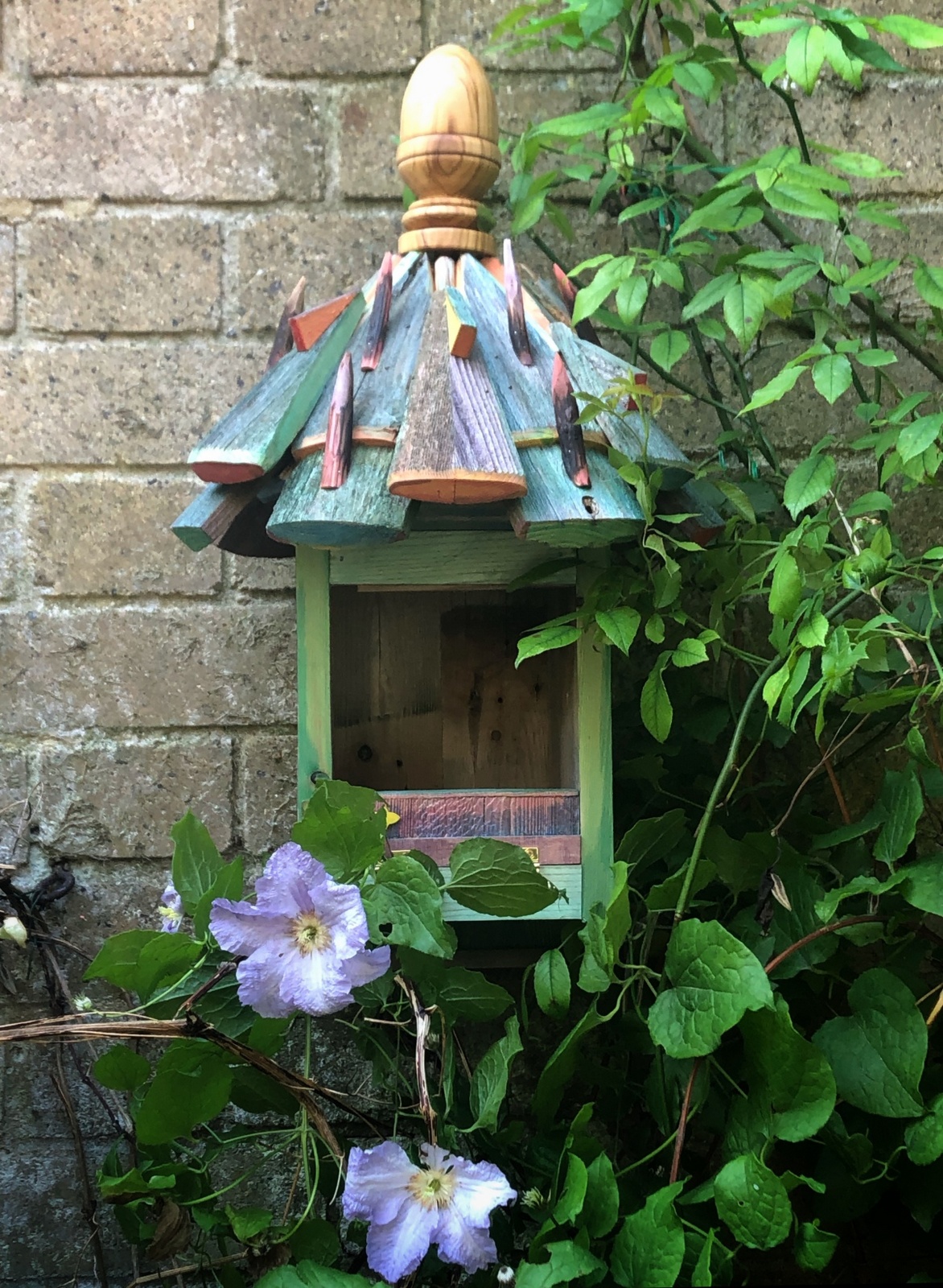
For the last element, we turn solid wood on the lathe into a traditional acorn style finial.

When construction is finished, coloring begins. We use a proprietary acrylic stain in contrasting tones to color the cedar in Fooby Wooby's unique style. Rustic, expressive, and colorful. 

No two Owl Houses are alike, but all follow scientific principles for bird care, quality construction, and delightful coloring.

Making an owl house
Owl House Placement

Nestboxes provide seasonal nesting, as well as roosting space year round.

Location 
Shaded area in woods, streamside forests, farmland, or suburban backyards, near water. 

Mounting
- Attach the owl house to straight trees wider than the box, or install on a pole or building. 

- Mount 10-30 feet high. 
- Face the entry hole east or south. 

Nesting Material
Add a couple inches of wood shavings or dry leaves to the bottom. 

Eastern Screech Owls start nesting in the Northeast in late winter and early spring. The search for a nesting site begins in early winter. ​Make sure your nestbox is up by then.


Songbird Nestbox

Birdhouse = Nestbox
Bird scientists call birdhouses "nest boxes" because that's what they are - a safe place for birds to have babies. 
Cavity Dwelling Birds

Not all birds will use a nestbox - only those birds who naturally nest in tree holes. They are known as cavity dwelling birds. So, there's no point in building a nestbox for Baltimore Oriole or a Goldfinch. They won't use it.

Good Housekeeping

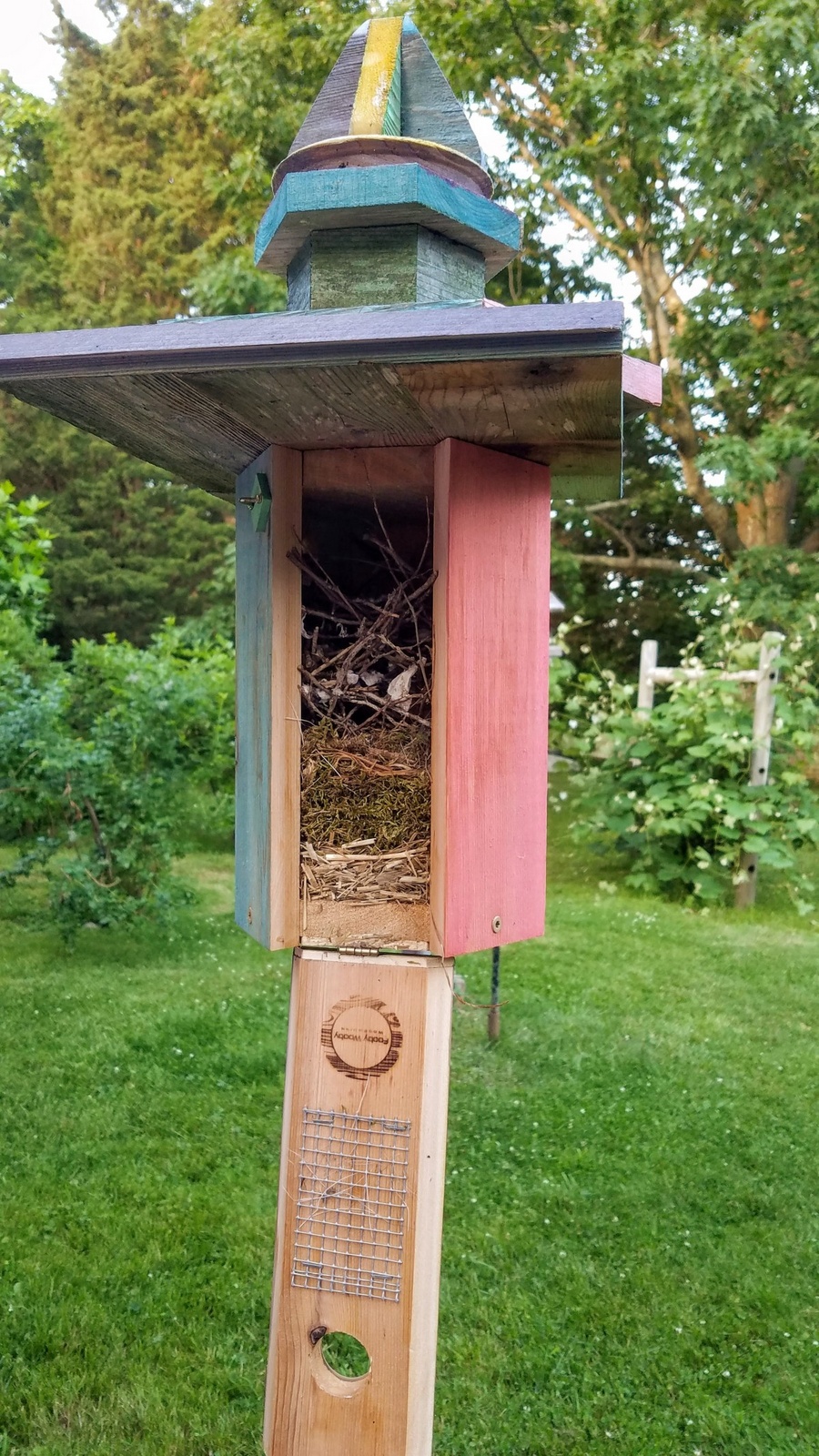
Our nestboxes have hinged doors so that after the young birds have fledged - left the nest - you can keep the birds healthy for next year by cleaning out the old nesting material. This helps prevent the spread of diseases, mites, mold and fungus.

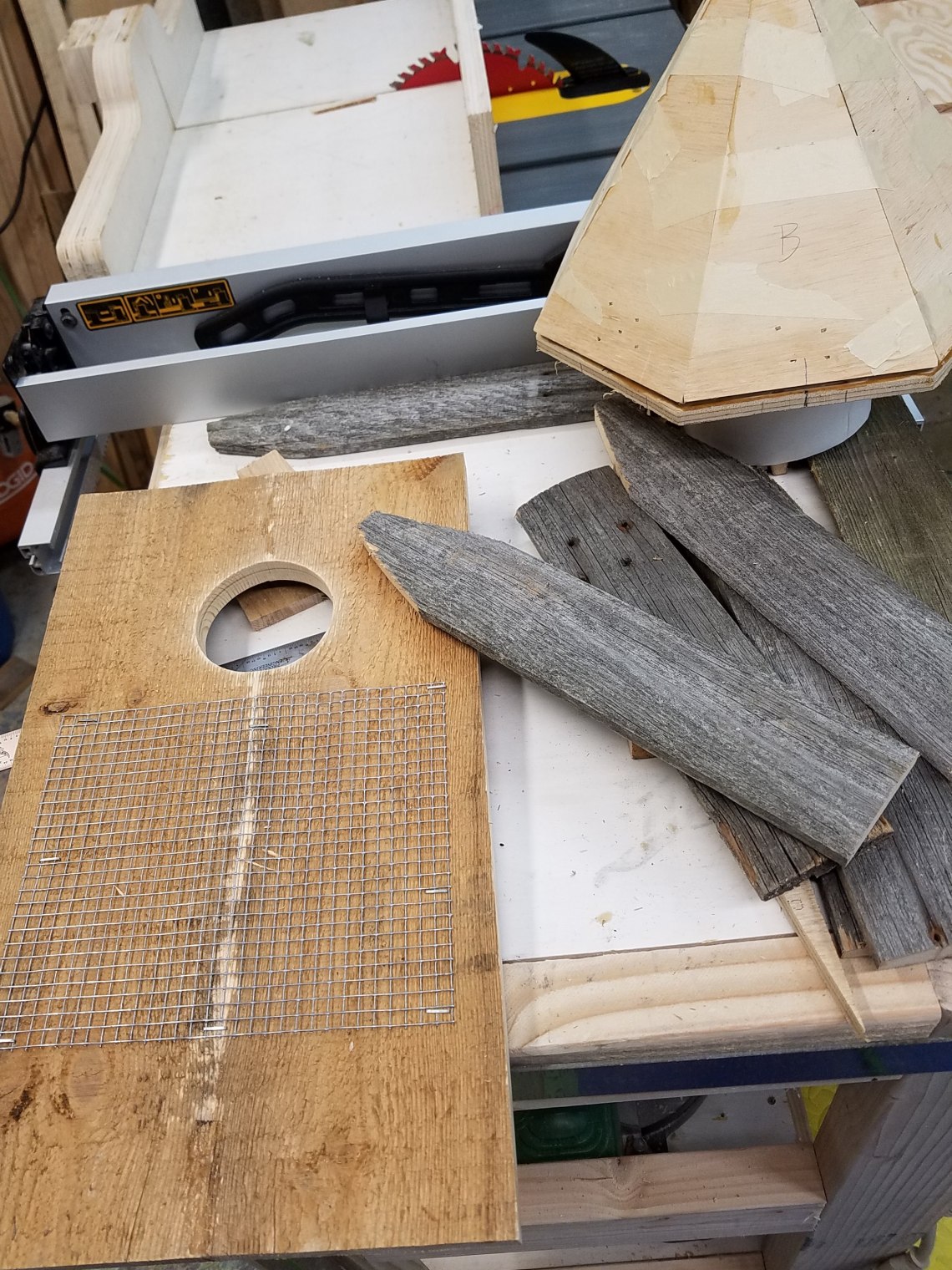
Inside front owl house panel with wire mesh for owlets

Making Owl House

It starts with recycled cedar fencing - flat and stockade pieces.. Flats are larminated to make front, side and back panels. 3 inch hole and wire mesh allows owlets to reach the outdoors. Octagonal pyramid roof is overlayed with stockade slats to make the cone/tiki roof. Colorful acrylic stain finishes it off!

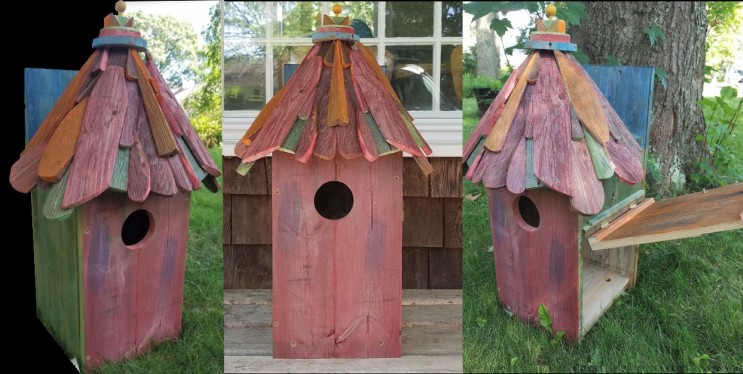
three views of finished Owl House

Wren / Chickadee

  • Entrance: 1 1/8" hole diameter
  • Face away from prevailing wind.
  • Habitat: Forests, woodlots, and yards with mature hardwood trees, forest edges, meadows
  • Mount for chickadees: 5-15 feet on pole, tree, building, post
  • Mount for House Wren: 4-6 feet

Nuthatch / Titmouse

  • Also: Woodpecker, and Carolina Wren
  • Entrance: 1¼" hole diameter 
  • Face away from prevailing wind.
  • Habitat: Deciduous forest, thick timber stands, woodland clearings, forest edges, woodlots, and riparian habitats.
  • Mount height: 5-15 feet

English Robin

  • Open-fronted, place in a hidden location in a climber or similar vegetation
  • English Robins are sensitive during nest building and egg laying, and will desert the nest if they think it has been discovered